
Devices
for smart cities

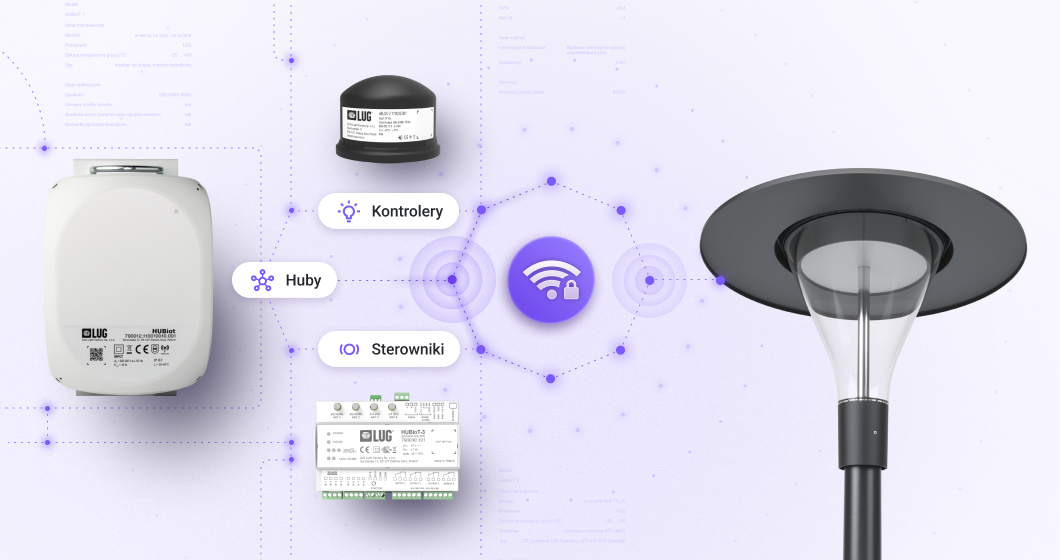
Controllers

Smart Lighting Controllers - Efficiency and Savings

Advanced control modules that enable remote lighting management and lower energy consumption. Full luminaire compatibility and easy integration with the central system.

Hubs

Communication hubs - key to stable data transmission

Gateway devices integrating field hardware with the cloud. Support for multiple communication standards (NB-IoT, LTE, Thread, RS485 Modbus) ensures uninterrupted data flow.

Comprehensive IoT solutions for smart urban infrastructure

The BIOT URBAN system, together with an advanced ecosystem of smart IoT devices, was created to optimize control and management of urban infrastructure.

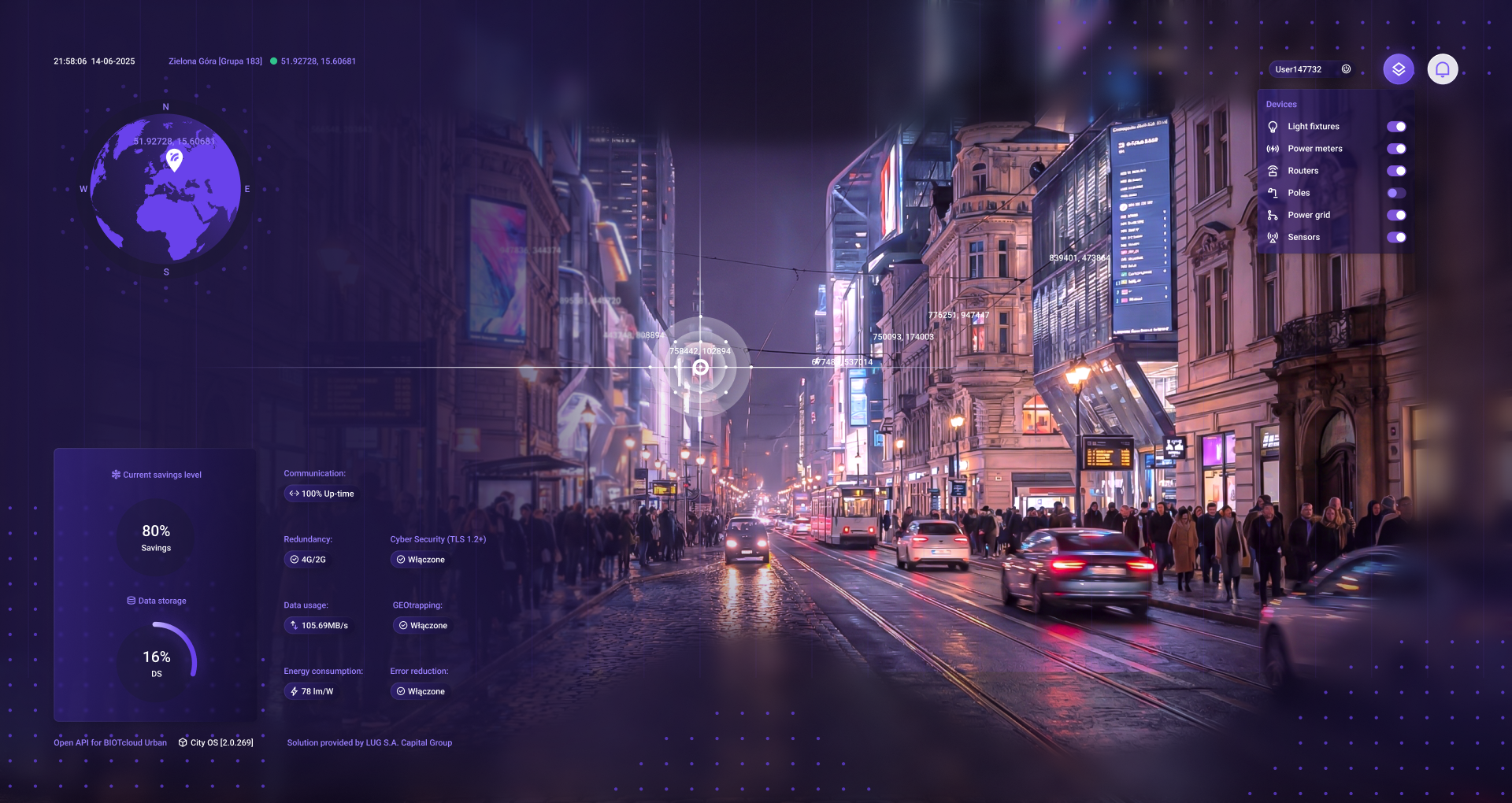
Modern sensors, measurement stations, controllers, hubs, and peripheral devices support efficient real-time monitoring, control, and analytics. Integrated technologies ensure full compatibility with the URBAN platform, enabling scalable and flexible expansion.
IoT infrastructure

Smart LED lighting and advanced sensors

As part of the ecosystem, we offer smart LED luminaires together with complete equipment for public lighting management through URBAN.

Advanced control algorithms optimize consumption and improve energy efficiency. Well-integrated sensing and metering solutions enable continuous monitoring of key urban environment parameters (air quality, noise levels, weather conditions, and traffic).

Integrated communication and data processing

By using a wide range of communication technologies (LoRa, LoRaWAN, NB-IoT, LTE Cat-M1, 4G LTE), BIOT URBAN enables optimal communication architectures tailored to each city's needs, ensuring reliable and secure data transmission.

Hubs and controllers integrate multiple hardware components, expanding ecosystem and city management capabilities. Open API simplifies integration with third-party systems, ensuring maximum functionality and interoperability.

Key benefits of
BIOTcloud

Energy savings

Optimization of energy consumption through intelligent management of lighting and other resources.

Security and monitoring

Advanced sensors and real-time data analytics improve safety and control in urban infrastructure management.

Flexibility and scalability

Open API and modular architecture allow system expansion according to city needs.

Improved quality of life for residents

Smart technologies support sustainable urban development and measurably improve daily comfort.

BIOT ecosystem
The future of smart cities

The BIOT Urban ecosystem is a comprehensive approach to urban infrastructure management.

Modern BIOT ecosystem

Our smart LED luminaires, sensors, and open API provide energy efficiency, safety, and greater comfort for residents.
Learn more about integration and optimization on our website.

Questions and answers

The Urban system consists of software (the cloud platform) and a range of physical devices. Key ones include: Hubs (gateways), Controllers (e.g., eBLOC) mounted in luminaires, and various peripherals such as network analyzers or sensors.
All key system components are designed and manufactured in Poland by the LUG S.A. Group, which includes BIOT. This guarantees full control over quality, service availability, and continuous technical support.
Our Urban platform is an open system, which means it can integrate with third-party devices. Thanks to support for open protocols such as TALQ, the system can also manage controllers from other manufacturers as long as they are compatible. This gives clients full flexibility in building and expanding their Smart City infrastructure.
Yes. Devices intended for outdoor operation (such as controllers or hubs) are designed and built to work in harsh outdoor conditions, across a wide range of temperatures and humidity, in accordance with applicable standards.
Yes. We hold certifications such as TALQ CMS, which means the Urban system can support controllers from third-party manufacturers if the producer provides a TALQ gateway service.
We use several solutions, chosen to match the needs of each project.
We use radio communication between devices as well as GSM/LTE.
There are also other options such as NB-IoT or LoRa depending on project requirements.