Energy Consumption Reduction
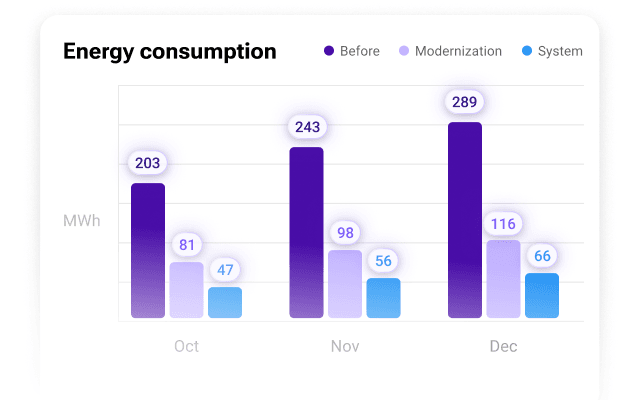
By dynamically adjusting lamp brightness to current demand, smart controllers can save up to 50% of energy compared to traditional lighting systems.

How do smart lighting controllers work?
They automate fixture operation, monitor energy usage, and enable remote control.
Benefits of implementing smart lighting controllers
Key implementation effects: energy savings, improved safety, and lower maintenance costs.
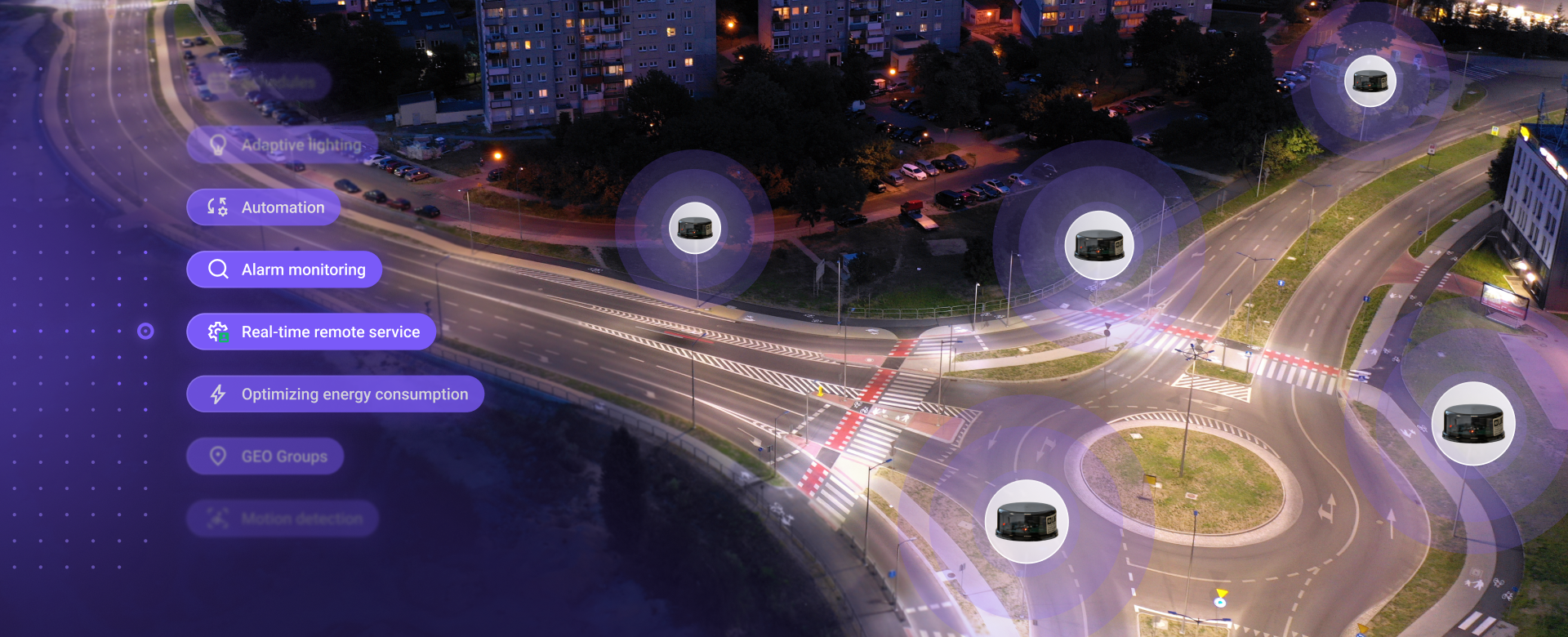
Smart lighting controllers are a key element of modern systems for managing luminaire operation and energy consumption in cities. They enable process automation, real-time monitoring, and energy optimization with per-luminaire precision.
Energy Consumption Reduction
By dynamically adjusting lamp brightness to current demand, smart controllers can save up to 50% of energy compared to traditional lighting systems.
Improved Safety
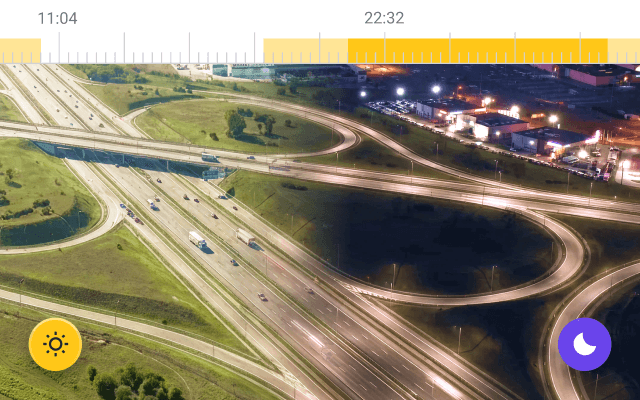
Control systems adapt lighting to road conditions, ensuring better visibility and reducing accident risk.
Maintenance Cost Optimization
Real-time monitoring of fixture health enables faster fault detection and lower service costs.

DALI D4i
Digital, bidirectional communication enabling precise lamp control and monitoring.
0-10V
Analog light-level control system.
RF Mesh
Each lamp is connected with others to form a reliable smart-lighting network. Very high security, high communication throughput, and unlimited transmission frequency enable a second autonomy layer (fog computing).
GSM
Controller-to-central-system communication without intermediate elements. Transmission uses licensed spectrum supervised by a telecom operator, ensuring the highest possible security level.
LoRaWAN
Low power consumption, long range, low data throughput, and significant limits on transmission frequency.
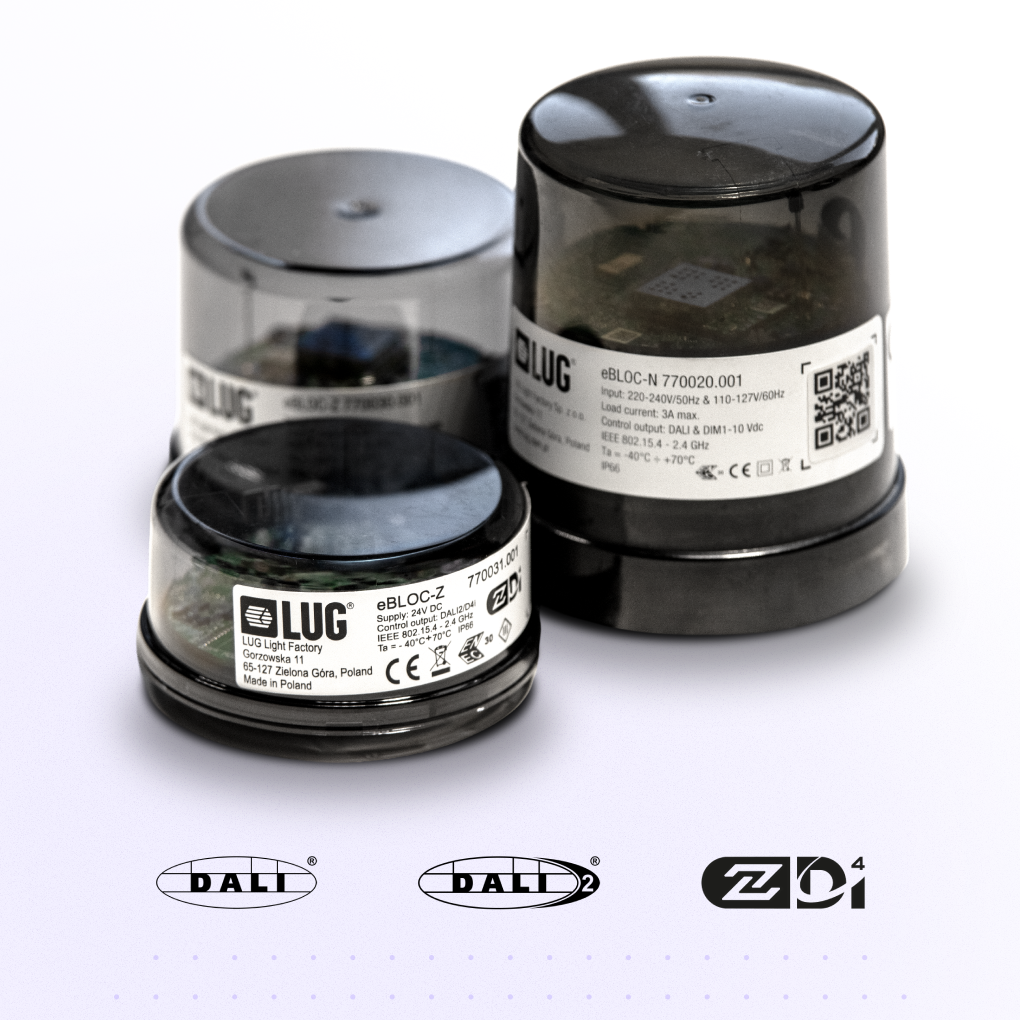
The eBLOC family of external controllers includes smart devices equipped with a
broad set of additional functions.
Key device capabilities:
Zhaga connector
Controller variant compatible with ZHAGA sockets compliant with Zhaga Book 18.

NEMA connector
Controller variant compatible with a NEMA 7-pin connector.
LTE-M or NB-IoT communication
Direct cloud communication using WAN networks.
Radio communication (Thread 2.4 GHz)
Reliable connection with the management platform, lower data transmission costs, and follow-me lighting support. Local mesh communication gives more flexibility in deployment.

Support for DALI, DALI2, and D4i drivers
Precise brightness control and bidirectional communication with luminaire drivers through modern digital interfaces.
Support for 1-10V drivers
Precise brightness control through an analog interface (NEMA variant only).
GPS module
Geolocation readout via GPS receiver, enabling automation of the device installation process.
Twilight sensor
Automatic light schedule management based on outdoor conditions.
Real-time clock
Awareness of current time and schedule execution regardless of MESH, LTE, or central server availability.
Electrical and temperature measurements
Real-time analysis and transmission of measured operating parameters.
Autonomous smart luminaire operation
By executing schedules stored in device memory, the luminaire continues to operate even without server communication.
iBLOC is an advanced lighting controller designed for installation inside luminaires, supporting:
DALI drivers
Precise brightness control.
1-10V drivers
Precise brightness control.
Radio communication (Thread 2.4 GHz)
Reliable connection with the management platform.
Real-time clock
Awareness of current time and schedule execution regardless of MESH, LTE, or central server availability.
Electrical and temperature measurements
Real-time analysis and transmission of measured operating parameters.
Autonomous smart luminaire operation
By executing schedules stored in device memory, the luminaire continues to operate even without server communication.
iBLOC and eBLOC smart controllers work with the Urban system, enabling:
Investing in smart controllers is a key step toward city digitization, energy savings,
and better quality of life for residents. Lower CO2 emissions, safer streets, and lower
electricity bills are only some of the benefits.
Want to learn more? Explore BIOT system solutions and invest in your city's future.